
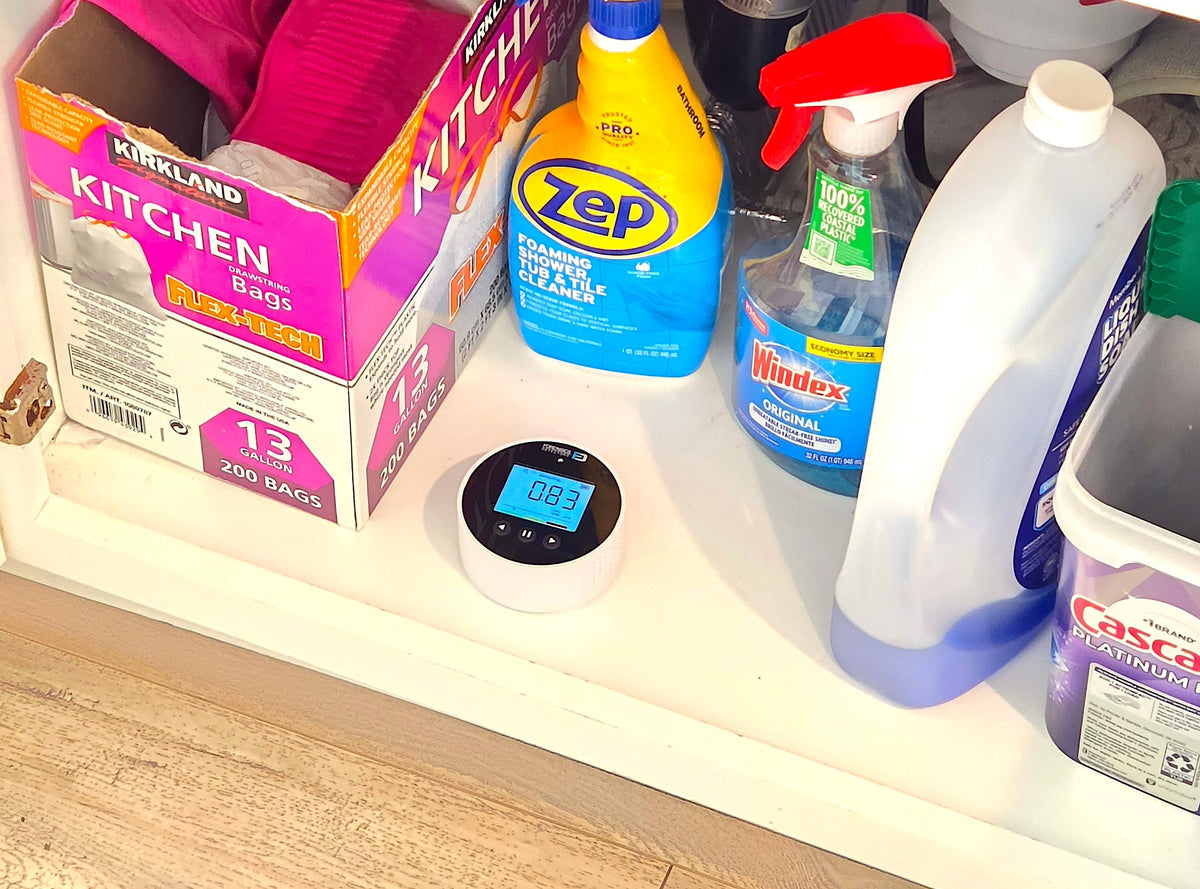
A radon detector for the home provides homeowners with a way to check radon levels and identify changes that may go unnoticed. Radon is an invisible, odorless radioactive gas that can enter homes from the soil, rock, groundwater, foundation openings, construction joints, and other pathways. It is also very dangerous as it is the second largest reason for cancer. Because it cannot be detected by human senses, testing is the only reliable way to determine whether radon is present indoors.
Pros |
Cons |
|
✅ Provides continuous radon detection inside the home. ✅ Allows homeowners to check averages, peaks, and changing indoor conditions. ✅ Digital models provide results without sending a test kit to a laboratory. |
⛔ Radon levels naturally fluctuate, so individual readings should not be interpreted in isolation. ⛔ Digital radon detectors may require charging or another continuous power source. ⛔ Elevated results may still require confirmation or evaluation by a qualified radon professional. |
What is the Best Radon Detector For Home?
- Forensics Detector Radon Detector | 355-Days Battery
- Airthings 2950 Wave Radon
- HOUND-3699 Radon Detector
- Ecosense EB100 EcoBlu
What Makes a Radon Detector for Home Useful?
A radon detector for home is particularly useful because radon exposure is a long-term indoor air quality issue rather than a hazard that can always be understood from a single measurement. Radon concentrations can change from day to day and across seasons, so continuous monitoring allows a homeowner to observe patterns instead of depending entirely on occasional tests.

What Features Should a Radon Detector for Home Have?
A useful radon detector for home should be simple enough for everyday household use while providing enough information to understand changing radon conditions. Important features include continuous monitoring, multiple averaging periods, a clear display, audible and visual warnings, long sensor life, dependable battery performance, and an easy charging method.
How Does the FD-64-RADON Work as a Radon Detector for Home?
The FD-64-RADON uses an alpha-decay event detector with a radon semiconductor sensor to measure radon entering the sensing chamber through natural diffusion. Radon decay produces alpha particles, and the detector uses these events to calculate the concentration of radon in the surrounding air. The measurement range is 0.09 to 1,000 pCi/L, equivalent to approximately 3.3 to 37,000 Bq/m³, with a stated accuracy of ±15%. After the detector is switched on, approximately six hours are required to collect enough data for its first measurement, after which the displayed recent measurement is refreshed every hour using the latest six hours of data.
Why Is Long Battery Life Important for a Radon Detector?
Long battery life makes a radon detector for home easier to use as a continuous safety monitor rather than something homeowners need to constantly charge or reconnect. Since radon is best understood over longer monitoring periods, a detector that can operate for most of a year on a charge helps reduce interruptions that could create gaps in the measurement history.
What Does the NOW Reading Mean on a Radon Detector for Home?
On the FD-64-RADON, the NOW value should not be interpreted as an instantaneous radon measurement. Instead, it represents the average radon concentration collected over the previous six hours, with the value refreshed every hour.
Why Does a Radon Detector for Home Show a 3-Day Average?
The 3-day average on a radon detector for home helps smooth out some of the short-term variations that occur naturally in indoor radon concentrations. A recent six-hour average can show relatively quick changes, but looking at three days of measurements provides more context and makes it easier to determine whether an elevated level is persisting.
Can One Radon Detector for Home Monitor an Entire House?
A single radon detector for home measures the air surrounding the detector rather than actively sampling every room in a building. For many homes, monitoring a representative location on the lowest regularly occupied level can provide valuable information about indoor radon conditions.
Should a Radon Detector for Home Stay in the Same Room?
Keeping a radon detector for home in one representative location makes it easier to compare readings over time because the measurement environment remains consistent. Frequently moving the detector between rooms can make the long-term average more difficult to interpret since each location may have different airflow and radon concentrations. If another room needs to be evaluated, the detector can be intentionally relocated and allowed to establish a new monitoring period. For long-term household monitoring, however, maintaining a consistent location generally produces more useful trend information.
How Should Homeowners Interpret Changes on a Radon Detector for Home?
Changes shown on a radon detector for home should be interpreted as part of a trend rather than judged only from the highest or lowest individual value. A rising six-hour average may indicate that indoor concentrations are increasing, while comparing that value with the 3-day and 7-day averages helps determine whether the change is temporary or continuing.
Can a Radon Detector for Home Be Left Running All Year?
The FD-64-RADON is particularly well suited to year-round monitoring because it combines continuous measurement with very low power consumption. Its current product listing specifies up to 355 days of battery operation, allowing the detector to remain active for most of a year before needing to be recharged. Continuous operation can help homeowners observe longer-term changes that would be difficult to see with occasional short tests and provides a running accumulated average as the monitoring period grows.
Is a Radon Detector for Home Useful for Renters?
A radon detector for home can be useful for renters because monitoring does not require permanent installation or modifications to the property.
Does a Radon Detector for Home Need Wi-Fi?
No it does not.
What Does the Alarm on a Radon Detector Do?
An alarm on a radon detector for home draws attention to elevated concentrations without requiring the homeowner to continually watch the display. The FD-64-RADON uses both audible and visual warnings. According to its specifications, the audible alarm is rated at 75 dB, while the LED flashes red during an over-limit condition.
Is a Radon Detector for Home Useful After Radon Mitigation?
A radon detector for home can remain useful after a mitigation system has been installed because reducing radon is not the same as permanently guaranteeing that concentrations will never change again.
Can a Radon Detector for Home Be Used in a New House?
A radon detector for home can be used in both newly constructed and older properties because the age of a house alone does not determine its radon concentration. Radon originates primarily from naturally occurring radioactive material in the ground and can enter through openings in a building's foundation.
What Maintenance Does a Radon Detector for Home Need?
None.
What Should You Do After a Very High Reading on a Radon Detector for Home?
After exposure to unusually high radon concentrations, homeowners should avoid assuming that the detector will immediately return to its normal baseline once moved to cleaner air. The FD-64-RADON manual notes that residual radon may remain after exposure to high concentrations and states that recovery can take approximately one to four days depending on the concentration. It recommends waiting roughly 24 to 48 hours after high radon exposure before relying on subsequent measurements. Persistent elevated household readings should be evaluated using appropriate radon testing and mitigation guidance rather than ignored as a temporary detector issue.
Is a Radon Detector for Home Worth Using Long Term?
The main benefit of a radon detector for home is its ability to turn radon testing from an occasional activity into continuous household monitoring. The FD-64-RADON is particularly suited to this role because its 6-hour, 3-day, 7-day, and long-term averages allow homeowners to interpret measurements across several timescales, while its 20+ year sensor life and up to 355-day battery operation reduce the maintenance associated with leaving the detector active throughout the year. Rather than relying on one number collected on one day, homeowners can observe how indoor radon behaves over weeks, months, and seasons and respond when elevated levels persist.
Final Words
A radon detector for home provides homeowners and renters with a convenient way to continuously monitor an indoor hazard that cannot be seen or smelled. For long-term residential monitoring, the Forensics Detectors FD-64-RADON combines an alpha-decay semiconductor sensor with a simple display, multiple averaging periods, audible and visual alarms, USB-C charging, a sensor designed to last more than 20 years, and battery operation specified for up to 355 days.
About The Author
Dr. Kos Galatsis ("Dr.Koz") is the President of FORENSICS DETECTORS where the company operates from the scenic Palos Verdes Peninsula in Los Angeles, California. He is a subject matter expert on gas sensor technology, gas detectors, gas meters, and gas analyzers. He has been designing, building, manufacturing, and testing toxic gas detection systems for over 20 years.

Every day is a blessing for Dr. Koz. He loves to help customers solve their unique problems. Dr. Koz also loves spending time with his wife and his three children going to the beach, grilling burgers, and enjoying the outdoors.
Read more about Forensics Detectors here.
Email: drkoz@forensicsdetectors.com