
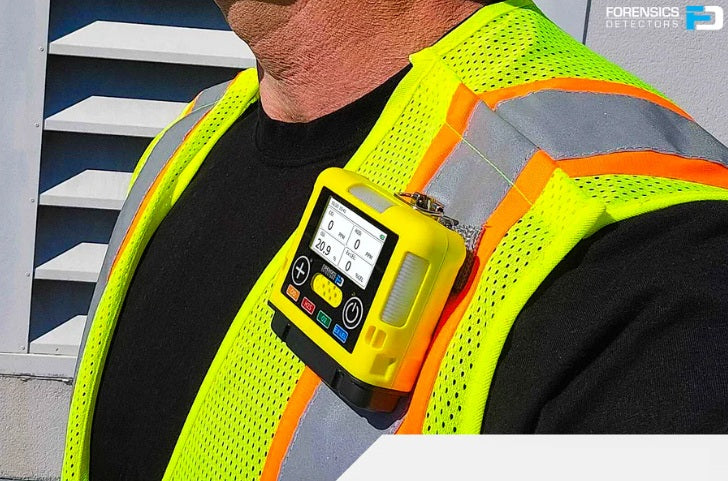
A 4-gas monitor, sometimes called a 4-gas meter or multi-gas detector, is a portable safety device used to detect carbon monoxide (CO), oxygen (O2), hydrogen sulfide (H2S), and combustible gases (EX). They combine these 4 gases because they are among the most common and dangerous hazards found in industrial environments. This allows workers to respond immediately and reduce the risk of injury, poisoning, or explosion. This is why 4 gas monitors are widely used in industries such as construction, oil and gas, mining, maritime, and wastewater operations.
Pros |
Cons |
|
✅ 4 gas for the most common multiple hazardous gases. ✅ Provides real-time alerts for unsafe conditions, confined spaces. ✅ Essential for industrial safety. |
⛔ Requires regular calibration and bump testing. ⛔ Sensors have a limited service life. ⛔ Limited to four gases unless upgraded. |
The Best 4 Gas Monitor
- Forensics Detectors 4 Gas Monitor | Mini
- MSA Multi-gas Detector
- RKI Portable Multi-gas Detector
- BW Honeywell 4 Gas Monitor
-
Teledyne 4 Gas Monitor
What Does a 4 Gas Monitor Detect?
A 4 gas monitor detects four most important gases in industrial settings that are critical to life. These include carbon monoxide (CO), oxygen (O2), hydrogen sulfide (H2S), and combustible gases (EX). Carbon monoxide is a colorless, odorless gas that can quickly become life-threatening, while hydrogen sulfide is highly toxic even at low concentrations. Oxygen levels are monitored to ensure there is enough breathable air, and combustible gases are measured to determine the risk of fire or explosion.
| Gas / hazard | Detection range | Resolution | Alarm threshold | Sensor type |
|---|---|---|---|---|
| Combustible gas (EX / LEL) | 0 – 100% LEL | 1% LEL | 10% / 25% LEL | Catalytic bead |
| Oxygen (O₂) | 0 – 30% vol | 0.1% vol | 19.5% / 23% vol | Electrochemical |
| Carbon monoxide (CO) | 0 – 999 ppm | 1 ppm | 25 / 50 ppm | Electrochemical |
| Hydrogen sulfide (H₂S) | 0 – 100 ppm | 1 ppm | 10 / 25 ppm | Electrochemical |
| Recommended calibration interval: 12 months · Alarm thresholds shown are typical OSHA/NIOSH values — verify against site-specific requirements | ||||
What Does a 4 Gas Monitor Detect in Confined Spaces?
In confined spaces such as tanks, silos, tunnels, and manholes, a 4 gas monitor detects conditions that may not be immediately noticeable but can quickly become dangerous. Many lives are lost in confined space incidents yearly. So its a dangerous application. This includes oxygen deficiency, the presence of toxic gases like CO and H2S, and the buildup of combustible gases. Because these environments often lack proper ventilation, gas levels can change rapidly, making continuous monitoring essential for safe entry and work.
What Does a 4 Gas Monitor Detect Using Sensors?
A 4 gas monitor relies on different sensor technologies to detect gases accurately. Electrochemical sensors are used for oxygen, carbon monoxide, and hydrogen sulfide, while a catalytic bead sensor is commonly used for combustible gases. These sensors respond to the presence of gas and convert it into an electrical signal, which is then processed and displayed on the device.
What Does a 4 Gas Monitor Detect Compared to Other Gas Detectors?
Compared to single-gas detectors, a 4 gas monitor offers broader protection by monitoring multiple hazards at the same time. While more advanced devices such as 5 gas or 6 gas monitors can detect additional gases, the 4 gas configuration is considered the standard for most confined space and industrial safety applications due to its balance of coverage and practicality.
What Does a 4 Gas Monitor Detect in Different Industries?
A 4 gas monitor is used across a wide range of industries to detect hazardous gases in different environments. In oil and gas operations, it helps identify combustible risks; in wastewater treatment, it detects hydrogen sulfide buildup; in construction and maintenance work, it ensures safe conditions in confined spaces; and in mining, it monitors oxygen levels and toxic gases underground. Its adaptability makes it a core safety tool in many sectors.
What Does a 4 Gas Monitor Detect Before Entry?
Before entering a confined space, a 4 gas monitor is used to test the atmosphere and confirm that conditions are safe. This involves checking oxygen levels, identifying the presence of toxic gases, and ensuring that combustible gas levels are below critical thresholds. Pre-entry testing is a key safety step that helps prevent exposure to hazardous environments.
What Does a 4 Gas Monitor Detect During Use?
While in operation, a 4 gas monitor continues to detect changes in gas concentrations and provides ongoing protection. If gas levels rise or oxygen levels drop unexpectedly, the device alerts the user immediately, allowing them to evacuate or take corrective action. This continuous monitoring is essential for maintaining safety throughout the duration of the task.
What Does a 4 Gas Monitor Detect in Terms of Safety Limits?
A 4 gas monitor is configured with preset alarm levels that correspond to recognized safety limits. For example, oxygen levels below 19.5% are considered unsafe, elevated carbon monoxide levels can lead to poisoning, hydrogen sulfide can become dangerous at relatively low concentrations, and combustible gases approaching their lower explosive limit indicate a serious explosion risk. These thresholds ensure timely warnings before conditions become critical.
What Does a 4 Gas Monitor Detect That It Cannot Identify?
While a 4 gas monitor is effective at detecting four key hazards, it does have limitations. It cannot identify all possible gases in an environment, and the combustible sensor does not distinguish between different types of flammable gases, as it is typically calibrated to methane.
What Does a 4 Gas Monitor Detect in Terms of Limitations?
A 4 gas monitor detects only the gases it is designed to measure, and its performance can be influenced by environmental factors such as temperature, humidity, and sensor aging. Regular calibration and maintenance are necessary to ensure accuracy, and users should be aware that other hazardous substances may still be present even if the monitor reads within safe limits.
Final Words
A 4 gas monitor is one of the most popular gas detectors available and used in industrial situations. It detects some of the most common and dangerous atmospheric hazards found in confined and industrial environments. By monitoring oxygen levels, toxic gases, and combustible conditions in real time, it provides critical information that helps prevent accidents and protect lives.
About The Author
Dr. Kos Galatsis ("Dr.Koz") is the President of FORENSICS DETECTORS where the company operates from the scenic Palos Verdes Peninsula in Los Angeles, California. He is a subject matter expert on gas sensor technology, gas detectors, gas meters and gas analyzers. He has been designing, building, manufacturing and testing toxic gas detection systems for over 20 years.

Everyday is a blessing for Dr. Koz. He loves to help customers solve their unique problems. Dr. Koz also loves spending time with his wife and his three children going to the beach, grilling burgers, and enjoying the outdoors.
Read more about Forensics Detectors here.
Email: drkoz@forensicsdetectors.com
Phone: +1 424-341-3886