
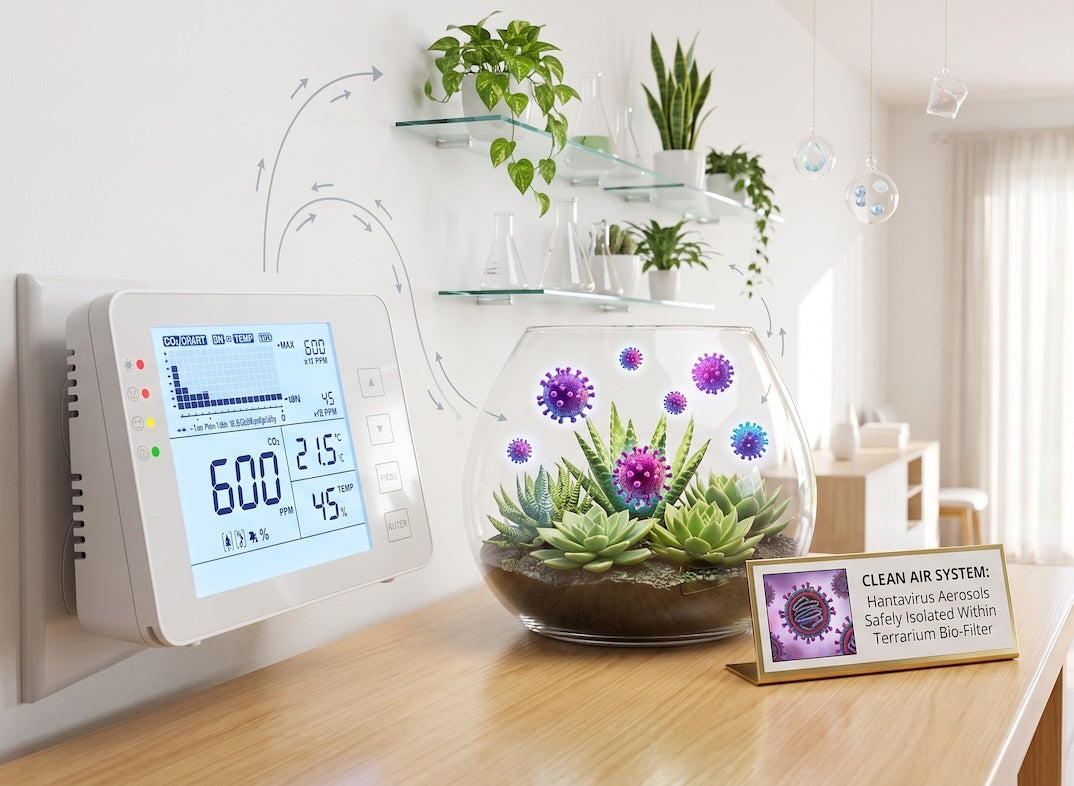
A CO2 monitor cannot indirectly confirm if hantavirus contamination is high by monitoring an indirect measure, which is carbon dioxide indoor levels. Hantavirus is primarily transmitted through contact with infected rodent urine, droppings, or saliva, especially when contaminated particles become airborne in enclosed or poorly ventilated spaces. Because of this, proper ventilation is one of the most important preventive measures. A CO2 monitor helps by measuring carbon dioxide buildup indoors, which is commonly used as an indicator of poor ventilation and stale air circulation.
Pros |
Cons |
|
✅ Helps identify poor ventilation and stagnant indoor air. ✅ Provides real-time indoor air quality awareness. Indirectly correlated with airborne virus infection ✅ Supports healthier airflow in enclosed environments. |
⛔ Does not directly detect hantavirus or rodent contamination. ⛔ Cannot replace proper cleaning and rodent control. ⛔ Requires proper placement for accurate readings. |
The Best CO2 Monitor Options for Hantavirus Awareness
Reliable indoor air quality monitoring is important when evaluating ventilation conditions in enclosed spaces. Popular options include:
- Forensics Detectors CO2 Monitor Plug-In 110V AC
- Forensics Detectors Analyzer (Personal Monitor)
- Temtop CO2 Professional Monitor
- Extech CO2 Datalogger
-
Aranet4 CO2 ppm Handheld
How a CO2 Monitor Can Help Reduce Hantavirus Risk
Poor ventilation is one of the main concerns in enclosed spaces. A CO2 monitor and a hantavirus prevention strategy are connected through airflow management, as elevated CO2 levels often indicate insufficient fresh-air circulation. Although a CO2 monitor does not detect viruses, it can indirectly measure the risk of contamination.
Why a CO2 Monitor Cannot Detect Hantavirus Directly
Unlike specialized laboratory testing equipment, a CO2 monitor and hantavirus detection serve very different purposes. A CO2 monitor measures carbon dioxide concentration in the air and is designed to evaluate ventilation effectiveness rather than identify biological contaminants. Hantavirus particles cannot be detected through standard indoor air quality monitors, meaning proper sanitation and rodent control remain essential preventive measures.
How a CO2 Monitor Supports Hantavirus Ventilation Safety
Higher CO2 readings often suggest that fresh air exchange is lacking, which may contribute to stale air buildup indoors. Monitoring these levels encourages better ventilation practices in homes, storage areas, basements, and workplaces.
How a CO2 Monitor Helps in Hantavirus-Prone Areas
Environments such as crawl spaces, garages, attics, sheds, and cabins are often vulnerable to rodent activity and poor airflow. In these situations, a CO2 monitor and hantavirus risk reduction approach can help users maintain healthier indoor air conditions by identifying areas where ventilation may need improvement. While the monitor itself does not identify rodents or contaminated materials, better airflow management may support safer occupancy and maintenance practices.
How a CO2 Monitor Improves Indoor Air Quality Against Hantavirus Concerns
Indoor air quality is heavily influenced by ventilation efficiency, occupancy levels, and airflow. A CO2 monitor and hantavirus awareness strategy both emphasize the importance of maintaining fresh air circulation indoors. Elevated CO2 levels are commonly associated with stale air and insufficient ventilation, making CO2 monitoring useful for identifying areas where airflow improvements may be necessary in homes, offices, classrooms, gyms, and commercial spaces.
How a CO2 Monitor Helps Reduce Airborne Hantavirus Exposure Risks
Fresh air exchange plays an important role in reducing the concentration of airborne particles indoors. Although a CO2 monitor and hantavirus exposure prevention plan do not directly remove contaminants, monitoring CO2 levels can encourage ventilation improvements that help dilute airborne dust, odors, and indoor pollutants. This makes CO2 monitoring a useful supplemental tool for maintaining healthier indoor environments.
How a CO2 Monitor Helps Hantavirus Prevention in Homes
Residential environments often experience poor airflow in enclosed areas such as basements, bedrooms, storage spaces, and garages. A CO2 monitor and hantavirus prevention setup can help homeowners identify rooms where ventilation may be inadequate and where fresh air circulation should be improved. Devices such as the Forensics Detectors CO2 Monitor Plug-In 110V AC provide continuous indoor CO2 monitoring along with temperature and humidity readings, making them useful for everyday indoor air quality awareness.
How a CO2 Monitor Helps Hantavirus Safety in Workplaces
Commercial buildings, warehouses, maintenance rooms, and industrial facilities may all experience ventilation challenges depending on occupancy and airflow conditions. In these environments, a CO2 monitor and a hantavirus workplace safety strategy can help facility managers identify areas where fresh-air circulation may be insufficient. Continuous monitoring supports indoor air quality management and may help improve overall workplace comfort and ventilation awareness.
How a CO2 Monitor Measures Indoor Air Conditions Related to Hantavirus Concerns
Carbon dioxide monitors measure indoor CO2 concentrations in parts per million (ppm), providing insight into ventilation effectiveness and indoor air circulation. As part of a CO2 monitor and hantavirus ventilation strategy, lower CO2 readings generally indicate better airflow and fresh air exchange, while elevated readings may suggest stagnant or poorly ventilated indoor conditions that should be addressed.
Final Words
A CO2 monitor and hantavirus prevention approach are connected through the shared goal of maintaining healthier indoor environments. Although a CO2 monitor cannot detect hantavirus directly, it can help users identify poor ventilation and improve airflow in enclosed spaces, reducing the risk of contamination.