
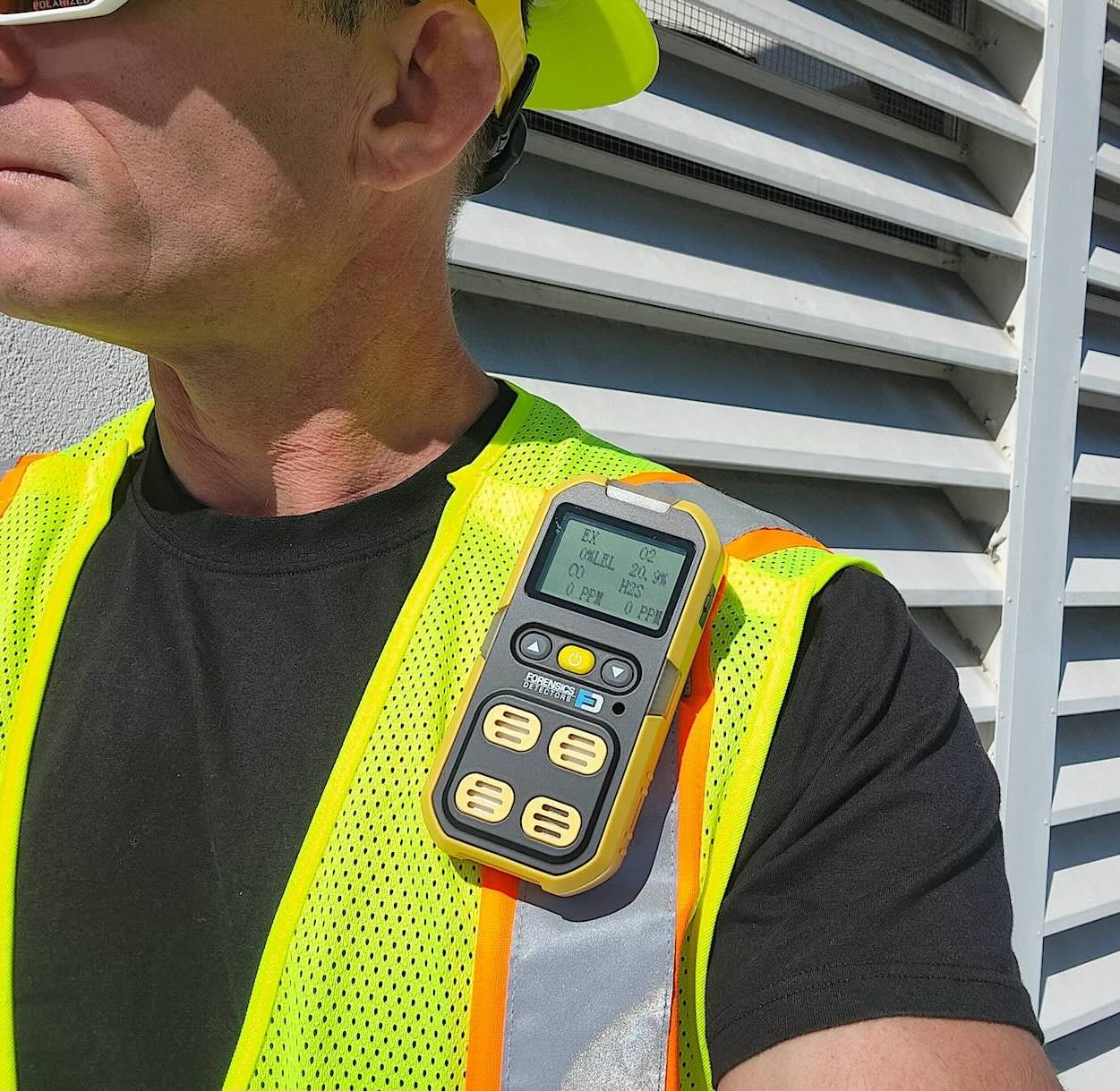
A 4 gas meter for confined space is used to simultaneously measure carbon monoxide (CO), oxygen (O2), hydrogen sulfide (H2S), and combustible gases (EX) in the air. Mostly used by workers with a chance of exposure to hazardous environments and confined spaces such as tanks, silos, tunnels, manholes, and vessels. When unsafe gas levels are detected, 4 gas meters alert users through audible alarms, visual indicators, and vibration alerts, ensuring immediate action can be taken.
Pros |
Cons |
|
✅ Provides real-time monitoring of 4 most popular life critical gases. ✅ Essential for personal safety in confined spaces and industrial settings. ✅ Detects CO, O2, H2S, and combustible gases simultaneously. |
⛔ Requires TLC. Calibration and bump testing. ⛔ Sensors have limited lifespan (typically 24–36 months). ⛔ Cannot detect all hazardous gases. Just know how it works and what it detects. |
The Best 4 Gas Meter for Confined Space?
- Forensics Detectors 4 Gas Meter for Confined Space
- MSA Multi-gas Detector
- RKI Portable Multi-gas Detector
- BW Honeywell 4 Gas Monitor
-
Teledyne 4 Gas Monitor
What Is a 4 Gas Meter for Confined Space?
A 4 gas meter for confined space is a portable safety device designed to detect and measure four critical gases in the air: carbon monoxide (CO), oxygen (O2), hydrogen sulfide (H2S), and combustible gases (EX). They are also called 4 gas meters, 4 gsa detectors, four in one gas detector and multigas detectors and multigas monitors. When there is a 4 gas present, they show the gas concentratoin levels, and if they exceed the preset alarm levels, the units will alarm to indicate to take action and move to fresh air.
What Is a 4 Gas Meter Used For?
A 4 gas meter is primarily used for personal protection and pre-entry air testing in hazardous environments. Workers wear the device while entering confined spaces to continuously monitor gas levels in real time, ensuring immediate alerts if dangerous conditions arise. In addition, before entering a confined space, the meter can be used to test air quality through openings or by using a sampling pump, allowing users to verify that the environment is safe before exposure.
What Does a 4 Gas Meter Measure?
A 4 gas meter measures four essential gases that are commonly found in hazardous environments: carbon monoxide (CO), which is a toxic gas that can be fatal at high concentrations; oxygen (O2), which is necessary to ensure breathable air levels; hydrogen sulfide (H2S), a highly toxic gas often associated with a strong odor; and combustible gases (EX), which indicate the presence of explosive gas concentrations that could pose fire or explosion risks.
What Does a 4 Gas Meter Do?
The primary function of a 4 gas meter is to monitor air quality and alert users to hazardous conditions that could threaten their safety. It continuously tracks gas concentrations in real time and activates audible, visual, and vibration alarms when gas levels exceed preset safety thresholds, helping to prevent serious incidents such as poisoning, oxygen deficiency, or explosions in confined or hazardous environments.
What Are the Different Types of 4 Gas Meters?
There are many types of 4 gas meters designed for different applications, including portable units that are compact and wearable for continuous personal monitoring, pump-equipped models that allow remote air sampling before entering confined spaces, and fixed gas detection systems.
How Does a 4 Gas Meter Work?
A 4 gas meter operates using a combination of sensors and electronic components that detect gas concentrations in the surrounding air and convert them into electrical signals. These signals are processed by an internal microprocessor and displayed on the device’s screen, allowing users to monitor gas levels in real time. When any gas concentration exceeds predefined safety limits, the device triggers alarms to warn the user, ensuring timely action can be taken to avoid hazardous exposure.
Is Using a 4 Gas Meter Mandatory?
In many industries, the use of a 4 gas meter is mandatory due to strict safety regulations governing work in confined or hazardous environments. These requirements often apply to confined space entry operations, hazardous waste handling, and industrial maintenance tasks, where monitoring air quality is critical to preventing accidents and ensuring worker safety.
Do 4 Gas Meters Identify Specific Gases?
Yes, 4 gas meters are designed to display individual readings for each gas being monitored, allowing users to clearly identify which gas is present and at what concentration. However, while toxic gases like CO and H2S are measured specifically, the combustible gas sensor typically detects a range of gases and is usually calibrated to methane, meaning readings are expressed relative to methane levels rather than identifying a specific combustible gas.
What Is a 4 Gas Meter Used For? (Real-World Examples)
A 4 gas meter is used in a wide range of real-world applications where hazardous gases may be present, such as industrial tanks where air quality must be tested before entry, plumbing and electrical work in enclosed spaces where oxygen levels may be low, wastewater systems where gases like methane and hydrogen sulfide can accumulate, and mining operations where workers are exposed to various toxic and combustible gases underground
4 Gas Monitor Exposure Table
| Gas | OSHA PEL | NIOSH REL | ACGIH TLV | NIOSH IDLH |
|---|---|---|---|---|
|
LEL / Combustibles Flammable gases (e.g. CH₄, H₂, propane) |
Action level: 10% LEL Alarm/evacuate: 25% LEL Danger: 100% LEL |
Alarm: 10% LEL Evacuate: 25% LEL |
No numerical TLV (simple asphyxiant; control below LEL) |
100% LEL Explosive / fire hazard |
|
O₂ — Oxygen Normal air: 20.9% |
Deficient: <19.5% vol. Enriched: >23.5% vol. 29 CFR 1910.146 |
Deficient: <19.5% Enriched: >23.5% |
Deficient: <19.5% Enriched: >23.5% |
<16% O₂ Severe physiological impairment |
|
CO — Carbon Monoxide |
8-hr TWA: 50 ppm 29 CFR 1910.1000 Table Z-1 |
8-hr TWA: 35 ppm Ceiling (15 min): 200 ppm |
TLV-TWA: 25 ppm STEL (15 min): 400 ppm |
1,200 ppm |
|
H₂S — Hydrogen Sulfide |
Ceiling: 20 ppm Peak (10 min/shift): 50 ppm 29 CFR 1910.1000 Table Z-2 |
Ceiling (10 min): 10 ppm STEL: 15 ppm |
TLV-TWA: 1 ppm STEL (15 min): 5 ppm |
100 ppm |
OSHA PEL = legally enforceable limit | NIOSH REL = recommended limit | ACGIH TLV = voluntary guideline (most conservative) | IDLH = immediately dangerous to life or health | TWA = time-weighted average | STEL = short-term exposure limit
How Do I Select a 4 Gas Meter?
Selecting the right 4 gas meter depends on several factors, including whether a built-in or external pump is needed for air sampling, the required battery life for your application, your available budget, and whether advanced features such as data logging or Bluetooth connectivity are necessary. Additionally, certifications and compliance requirements should be considered. Also make sure the 4 gas meter comes with a certificate showing it is calibrated to NIST traceable sources. In Europe and UK, NPL traceable sources.
How Are 5-Gas and 6-Gas Meters Different from a 4-Gas Meter?
A 4-gas meter typically measures four core hazards oxygen (O₂), combustible gases (LEL), carbon monoxide (CO), and hydrogen sulfide (H₂S) which are the standard risks in most confined spaces; in contrast, 5-gas and 6-gas meters expand detection capabilities by including one or two additional toxic gases such as sulfur dioxide (SO₂), nitrogen dioxide (NO₂), ammonia (NH₃), or volatile organic compounds (VOCs), depending on the specific model and application, making them more suitable for environments with complex or industry-specific hazards like chemical plants, refineries, or wastewater facilities, where relying only on a 4-gas meter may not provide sufficient protection.
How Long Do 4 Gas Meter Sensors Last?
The lifespan of sensors in a 4 gas meter lasts between 24 to 36 months.
How Do I Test a 4 Gas Meter?
A 4 gas meter is tested through a process known as bump testing, where the device is briefly exposed to a known concentration of gas to verify that the sensors and alarm systems are functioning properly, ensuring the device is reliable before use in hazardous environments.
How Do I Take Care of My 4 Gas Meter?
Proper maintenance of a 4 gas meter involves storing it in a clean and dry environment, avoiding exposure to extreme temperatures, regularly cleaning the device, and keeping it away from dust, chemicals, and other contaminants that could affect sensor performance and accuracy.
How Do I Properly Use a 4 Gas Meter?
To properly use a 4 gas meter, it should be turned on in fresh air to establish a baseline reading, regularly checked to ensure calibration is up to date, configured with appropriate alarm settings, and subjected to routine bump testing to confirm that it is functioning correctly before being used in hazardous environments.
Final Words
A 4 gas meter for confined space is a critical safety device designed to protect workers from hazardous gas exposure. By continuously monitoring oxygen levels, toxic gases, and combustible environments, these devices provide real-time alerts that can prevent serious injury or fatal incidents.
About The Author
Dr. Kos Galatsis ("Dr.Koz") is the President of FORENSICS DETECTORS where the company operates from the scenic Palos Verdes Peninsula in Los Angeles, California. He is a subject matter expert on gas sensor technology, gas detectors, gas meters and gas analyzers. He has been designing, building, manufacturing and testing toxic gas detection systems for over 20 years.

Everyday is a blessing for Dr. Koz. He loves to help customers solve their unique problems. Dr. Koz also loves spending time with his wife and his three children going to the beach, grilling burgers, and enjoying the outdoors.
Read more about Forensics Detectors here.
Email: drkoz@forensicsdetectors.com
Phone: +1 424-341-3886